Japan in autumn is built for looking slowly. Maple leaves turn from green to orange and deep red. Ginkgo avenues become almost electric yellow. Temple roofs, ponds and stone paths sharpen the contrast. If you are already in a heightened mood, small details can feel enormous: leaf edges, footsteps on gravel, cold air and light moving across water.
The trick is choosing a place that fits the experience. A simple garden loop can feel far better than a crowded mountain route with three transfers. Think of this as a Japan fall foliage route built around one Tokyo hotel base, with two bigger day-trip options if you want them.
When are autumn leaves best in Japan?
For Tokyo, plan around mid-November through early December. The official Tokyo guide says leaves begin turning around mid-November, while Rikugien is typically strongest from late November into early December. Kyoto usually begins coloring from mid-November. Mountain and higher-elevation areas can turn earlier.
Those are typical windows, not a 2026 forecast. Heat, rain and elevation change the timing. Check the official local foliage report and same-day opening information before committing to a long trip.
| Place | Typical window | Best mood | Effort |
|---|---|---|---|
| Rikugien, Tokyo | Late Nov–early Dec | Deep, visual, quiet | Easy |
| Meiji Jingu Gaien, Tokyo | Mid-Nov–early Dec | Bright, social, photo-led | Easy |
| Koishikawa Korakuen, Tokyo | Late autumn | Calm, textured, low-pressure | Easy |
| Mt. Takao, Tokyo | November | Clear-headed, outdoorsy | Moderate |
| Nikko or Kyoto | Varies by place | Full-day immersion | Higher |
1. Rikugien: the best all-round sensory view
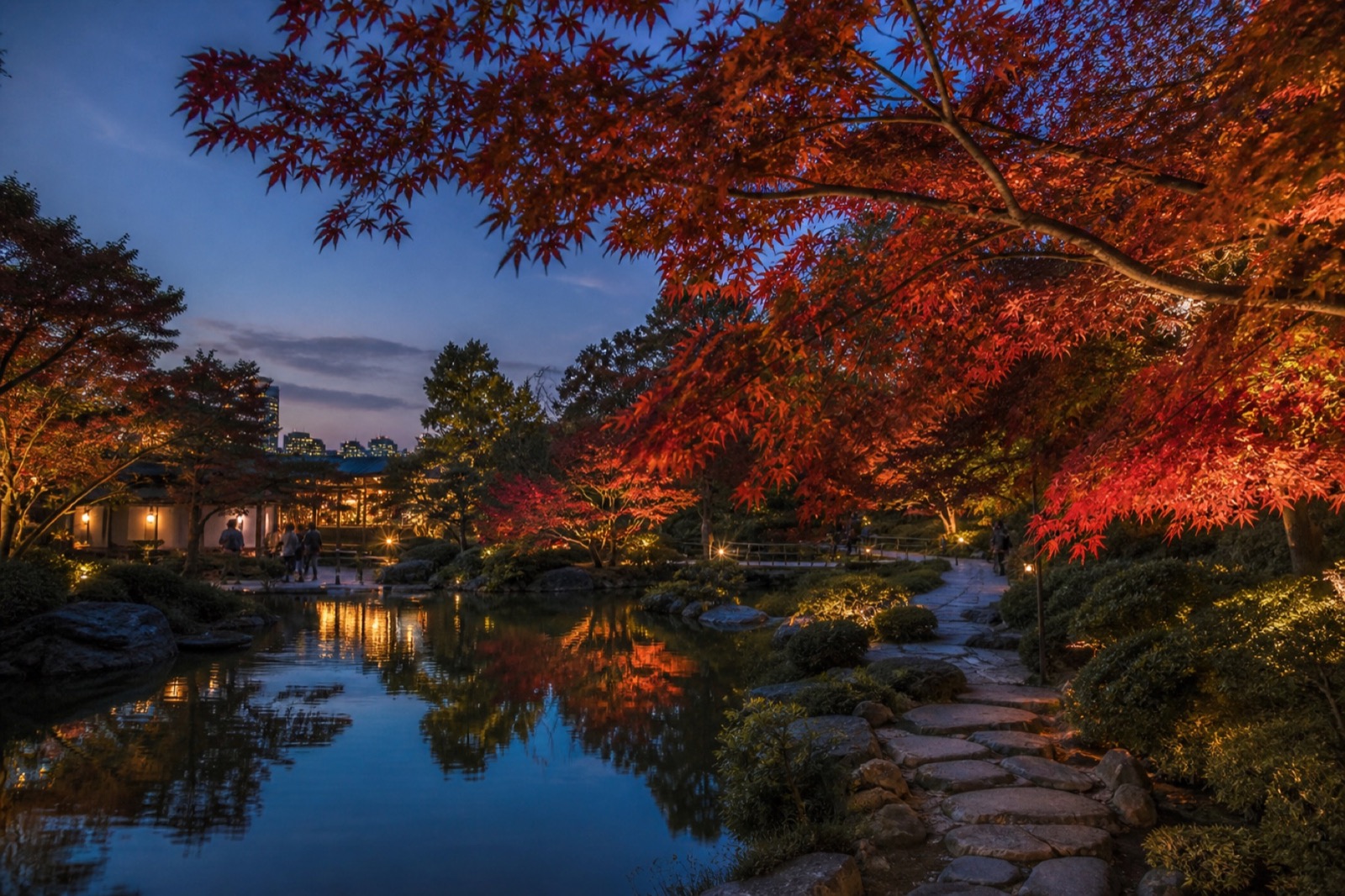
Best for · slow and visualRikugien is the cleanest match for an immersive autumn afternoon. The traditional garden gives you red maple, water reflections, small bridges and carefully framed views without requiring a hike. The route is compact enough to pause, reset or leave when you want.
Go before the busiest part of the day if you prefer space. Seasonal evening openings can be beautiful, but they can also draw crowds and may change from year to year. Confirm the current schedule before you go. Komagome Station is a short walk away, which keeps the trip back simple.
2. Meiji Jingu Gaien: a tunnel of gold in the city
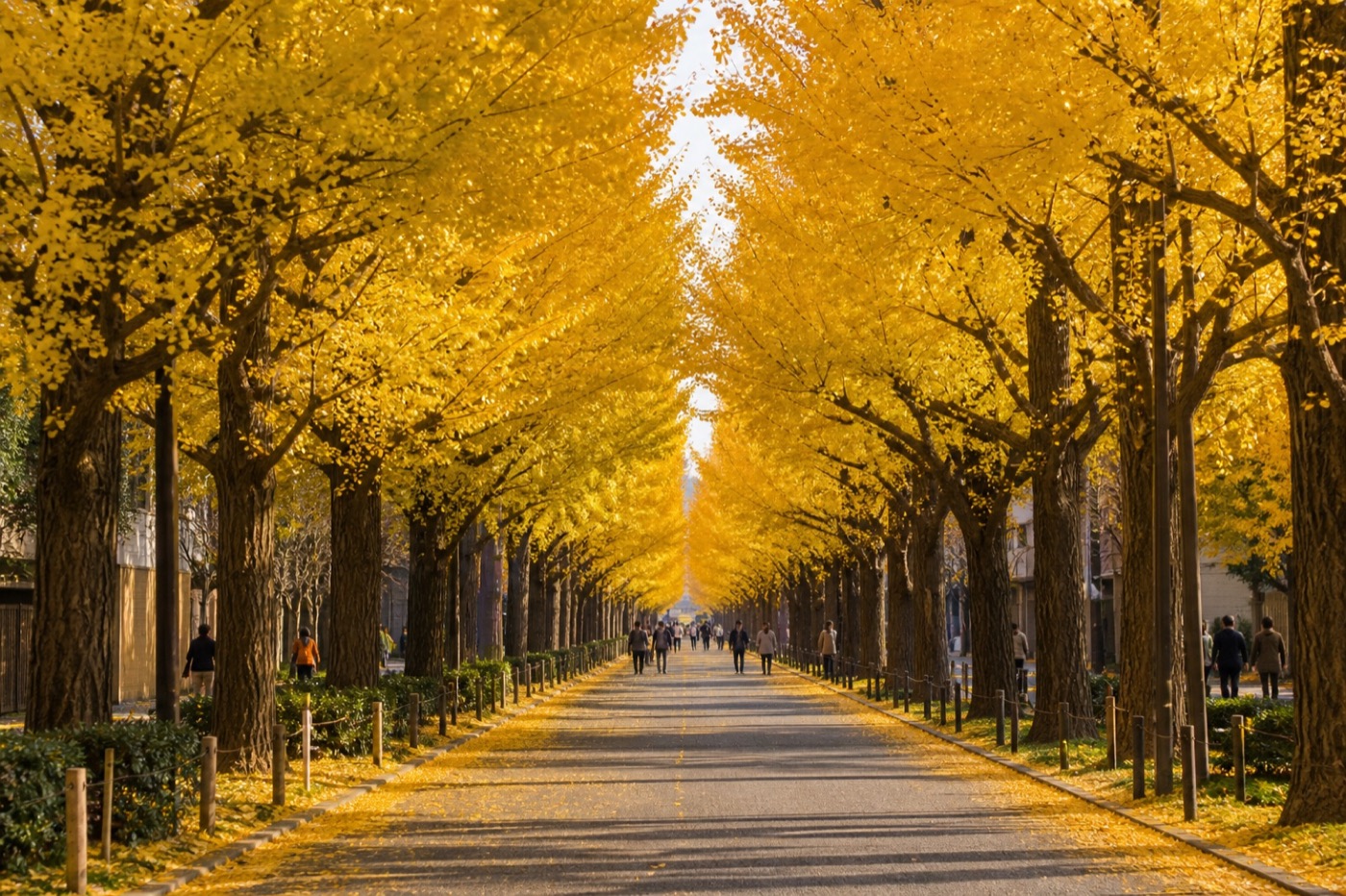
Best for · bright and socialIf red maples feel meditative, the ginkgo avenue at Meiji Jingu Gaien feels cinematic. Tall trees form a symmetrical corridor and the yellow canopy changes with every patch of light. It is easy to combine with Aoyama, a café stop or an early dinner.
This is a public avenue rather than a private garden, so expect people, cameras and traffic nearby. Visit on a weekday morning for a gentler version. Keep the plan short: one walk, one warm drink, one next stop.
3. Koishikawa Korakuen: quieter details, less performance
Best for · calm and groundedKoishikawa Korakuen offers the traditional-garden mood with less pressure to capture the perfect shot. Water, stone, bridges and trees unfold in smaller scenes. That makes it a strong choice when you want to notice texture rather than chase a dramatic viewpoint.
Build in time to sit, hydrate and let your senses settle. The garden is central, and the surrounding transport options make it easy to return to the hotel without turning the day into a navigation test.
4. Mt. Takao: beautiful, but keep your head clear
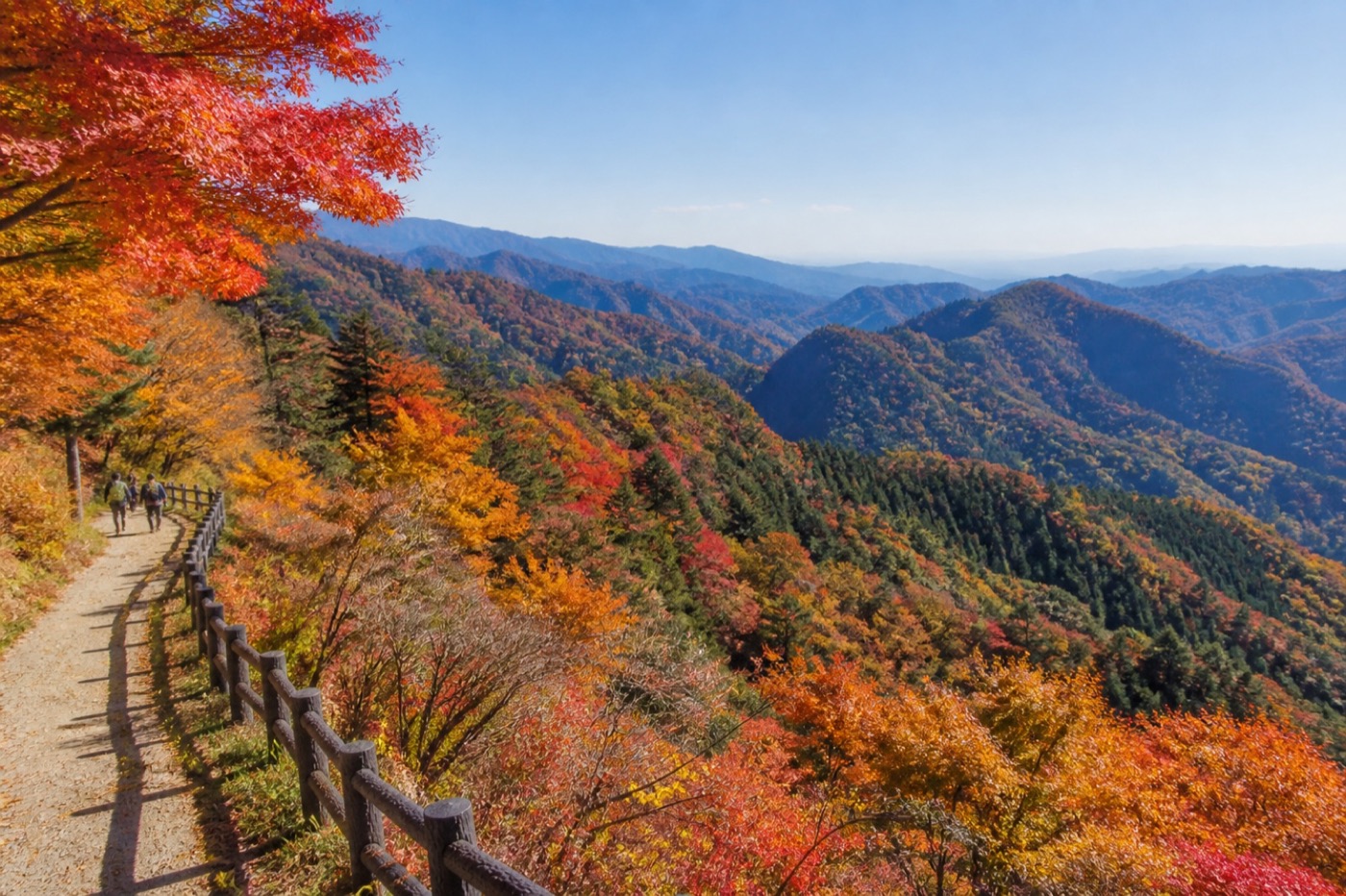
Best for · nature afterglowMt. Takao brings forest color, cooler air and a wider view, all within reach of central Tokyo. It is also the one Tokyo option here where restraint matters most. Trails, steps, changing weather and busy transport do not mix well with impaired balance or judgment.
Make the leaves the main event. Hike clear-headed, wear proper shoes and save any adult cannabinoid experience for a private, permitted place after you are safely back. If you want the easiest version, check current cable-car operations and avoid the most crowded weekend hours.
5. Nikko or Kyoto: for a full autumn chapter
Best for · a dedicated foliage dayChoose Nikko when you want mountain scenery and historic architecture on a day trip from Tokyo. Color timing varies sharply by elevation, so a single “peak date” is not useful. Check the official local report for the exact area you plan to visit.
Choose Kyoto when autumn leaves are a major reason for your Japan trip. Temples, gardens and hills offer dozens of options, commonly from mid-November into early December. Famous sites become extremely busy, and some evening illuminations require separate hours or tickets. Pick one area instead of crossing the whole city.
Which places work best for a heightened experience?
Soft and visual
Rikugien. Compact, reflective and easy to leave when you have had enough stimulation.
Bright and social
Meiji Jingu Gaien. A simple golden avenue with cafés and city transport close by.
Quiet and grounded
Koishikawa Korakuen. Smaller scenes, a slower rhythm and fewer decisions.
Big nature
Mt. Takao or Nikko—but enjoy the trails clear-headed and keep any adult product use for later in private.
A simple Tokyo autumn plan
- Choose one color. Pick red maple at Rikugien or gold ginkgo at Meiji Jingu Gaien instead of trying to do both.
- Check the official page. Confirm leaf conditions, opening hours, tickets and any seasonal evening schedule.
- Message before the outing. Share your hotel area, preferred format and how you want the evening to feel.
- Keep product use private. Read the current product guidance, wait until you understand the effects and do not use at the attraction.
- Protect the return. Save your hotel address, keep your phone charged and choose a direct train or taxi route.
Match the mood before the leaves turn
Tell us your Tokyo hotel area, preferred format and whether you want the evening to feel soft and visual, social, or deep and slow. We will confirm the current menu, total and delivery timing before dispatch.
Message for Tokyo deliveryPlanning sources
Travel content for adult visitors. Products, individual effects, foliage timing, attraction hours and rules vary. This is not medical or legal advice. Confirm current local information before travel.